
Compare CKAD vs CKA vs CKS and find the best Kubernetes certification for your career path in DevOps, SRE, or cloud engineering. Understand the key differences in focus, difficulty, and roles so you invest your time and money in the right exam. Don’t wait—choose the right Kubernetes cert today and stay ahead of the competition before the market gets even more crowded! #CentLinux #Kubernetes #Certification
Table of Contents
Introduction
Kubernetes has become the beating heart of modern cloud-native infrastructure, and with that rise comes a huge demand for professionals who actually know how to use it—not just in theory, but in real-world, hands-on scenarios. This is exactly why the
- CKAD (Certified Kubernetes Application Developer),
- CKA (Certified Kubernetes Administrator), and
- CKS (Certified Kubernetes Security Specialist)
certifications have exploded in popularity. But here’s the problem: most people trying to get into the Kubernetes world have no idea what the real differences are, which one matches their skillset, or which one employers value more. If that’s you, don’t worry—you’re far from alone. (Kubernetes Official Website)
A lot of beginners think all three certifications teach the same thing, but that couldn’t be further from the truth. Each certification is built around a completely different role in the Kubernetes ecosystem. One is meant for developers, one for system administrators, and one specifically for security-focused professionals. And depending on which direction you want to take your tech career—DevOps, SRE, cloud engineering, platform engineering, security engineering—your choice of certification can dramatically shape your journey.
But here’s where it gets interesting: many professionals who already work in DevOps or cloud roles still feel confused about which exam to take first. Should you dive straight into CKA? Do you start small with CKAD? Or does it make sense to jump into CKS if security is your passion? This article breaks everything down step-by-step, comparing skill requirements, job opportunities, difficulty levels, and even salaries to help you make a confident, informed decision.
By the end of this guide, you’ll know exactly which certification aligns with your goals and why. And not just theoretically—you’ll understand how each one feels in the real world because we’re going deep into practical use cases, not just the official definitions.
What Are Kubernetes Certifications?
Kubernetes certifications are more than just fancy badges you add to your résumé—they’re industry-recognized proof that you can actually work with Kubernetes in real-world environments. These certifications are created and managed by the Cloud Native Computing Foundation (CNCF) in partnership with the Linux Foundation, two of the most respected organizations in the cloud-native ecosystem. What makes these certifications stand out is that they test practical, hands-on skills using live Kubernetes clusters. No multiple-choice questions. No memorization tricks. You’re dropped into a real CLI environment and expected to solve real problems under time pressure. And that’s exactly why employers trust these certifications so much.
Think of Kubernetes certifications as a way to bridge the gap between “I know Kubernetes concepts” and “I can actually deploy, fix, and secure Kubernetes workloads in production.” Unlike vendor-specific certifications (such as AWS, Azure, or GCP), these ones are completely vendor-neutral, meaning they teach you pure Kubernetes—no cloud provider lock-in, no platform-specific tools. Whether you end up working with Amazon EKS, Google GKE, Azure AKS, or on-premises clusters, the skills remain fully transferable.
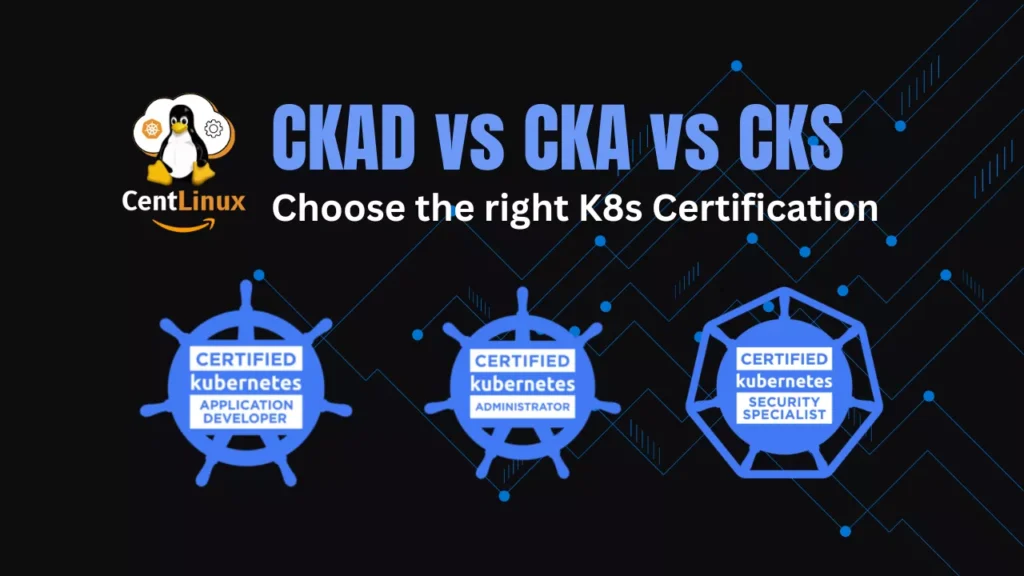
Another important thing to understand is that each certification targets a different role within the Kubernetes ecosystem. CKAD focuses on application development inside Kubernetes, CKA focuses on the administration and management of clusters, while CKS focuses on advanced cluster security and threat mitigation. These roles require totally different ways of thinking, completely different command sets, and different real-world responsibilities. That’s why the exams are intentionally structured to test role-specific expertise rather than general Kubernetes knowledge.
To put it simply, Kubernetes certifications act like a roadmap for your cloud-native career. Whether you’re a beginner trying to break into DevOps, a developer trying to modernize your workflow, or a security engineer looking to specialize, these certifications show the industry exactly what you bring to the table. And since all three exams are performance-based, anyone who passes has proven they can handle real Kubernetes tasks—not just talk about them.
Overview of CKAD Certification
The Certified Kubernetes Application Developer (CKAD) certification is designed for people who want to build, deploy, and run applications inside Kubernetes. Unlike the CKA and CKS exams, which focus heavily on cluster management, networking, and security, CKAD stays fully centered on the application layer. If you’re a developer—or even someone who wants to understand how modern cloud-native apps are built—this certification can be a total game changer for your career.
What makes CKAD interesting is that it teaches you how to think in Kubernetes. Instead of writing apps that run on traditional servers, you learn how to design applications that behave like native citizens of a containerized, orchestrated environment. You get hands-on experience working with Deployments, StatefulSets, Jobs, Services, ConfigMaps, Secrets, volumes, and even more advanced patterns like sidecar containers. CKAD pushes you beyond just writing code—it teaches you how to package, configure, expose, scale, and troubleshoot applications the Kubernetes way.
One of the most appealing things about CKAD is its learning curve. While it’s not “easy” by any means, it’s typically considered more approachable compared to CKA and CKS. That’s because you don’t have to worry about cluster provisioning, networking internals, encryption, or complex security hardening tasks. Instead, you get to focus on the parts developers interact with daily. If you’re someone who enjoys building things rather than managing infrastructure, CKAD feels natural and even fun.
CKAD is also incredibly useful for DevOps engineers who want to strengthen their application-focused skills. In real-world DevOps roles, understanding how apps behave inside containers is just as important as knowing how the underlying cluster works. With CKAD, you gain confidence in deploying microservices, debugging failed pods, optimizing resource usage, and ensuring your applications run reliably across environments.
And here’s an underrated benefit: CKAD makes you much better at writing production-ready YAML. It may sound like a small thing, but YAML mastery is a superpower in Kubernetes environments. By the time you finish preparing for CKAD, writing clean manifests becomes second nature.
If your goal is to build or deploy applications in Kubernetes—without diving too deep into cluster internals—CKAD is the perfect starting point.
Overview of CKA Certification
The Certified Kubernetes Administrator (CKA) certification is the gold standard for anyone who wants to understand Kubernetes at its core. If CKAD teaches you how to build and deploy apps, CKA teaches you how to run, operate, and maintain the entire Kubernetes cluster. This exam goes far beyond creating Deployments or Services—it takes you into the world of nodes, control planes, networking, scheduling, storage, and troubleshooting. Think of CKA as the certification for the “engineers behind the scenes,” the people who keep Kubernetes environments alive and healthy.
One of the defining features of the CKA exam is its hands-on depth. You don’t just learn the commands—you learn why clusters behave the way they do. You understand how components like the kube-apiserver, etcd, scheduler, and controller manager work together under the hood. This gives you the power to troubleshoot problems that most engineers can’t even identify. If a pod won’t schedule, a control plane component crashes, or network traffic suddenly stops flowing, the skills you develop while preparing for CKA help you diagnose and fix the issue like a real SRE or DevOps pro.
Another important aspect of CKA is that it builds confidence in operating Kubernetes in production. Preparing for the exam forces you to learn cluster architecture, node operations, high availability, certificates, storage classes, kubelet behavior, cluster upgrades, and even disaster recovery. These are the tasks that real platform engineers and Kubernetes admins must handle every day. If CKAD is about building the car, CKA is about understanding the engine, the fuel system, and the entire machine that makes everything run.
CKA is also one of the most sought-after certifications in the cloud-native job market. Employers value it because it proves you can take responsibility for real infrastructure. Roles like Kubernetes Administrator, DevOps Engineer, Cloud Engineer, Site Reliability Engineer, and Platform Engineer often list CKA as a preferred—or even required—qualification. Since the exam uses real clusters and real operational tasks, companies know you can jump into their environment and be productive almost immediately.
While the CKA exam is more challenging than CKAD, it’s also incredibly rewarding. It gives you a deep, practical understanding of Kubernetes that sets you apart from developers who only see the surface level. And once you pass CKA, you’re perfectly positioned to tackle more advanced certifications like CKS. If your goal is to master Kubernetes from the ground up and become the person who can manage and fix anything in a cluster, CKA is the certification you should take.
Overview of CKS Certification
The Certified Kubernetes Security Specialist (CKS) certification takes everything you know about Kubernetes and pushes it into a whole new realm—security. If CKAD helps you build apps and CKA helps you run clusters, CKS teaches you how to secure them against real-world threats. And let’s be honest: in a world where cyberattacks are growing more complex every year, Kubernetes security skills aren’t just valuable—they’re critical.
What makes CKS truly unique is its focus on applied, hands-on security. This isn’t a theoretical exam where you memorize security best practices and call it a day. Instead, you’re placed in live Kubernetes clusters and tested on tasks like hardening nodes, configuring secure network policies, scanning container images, detecting vulnerabilities, applying runtime protection, and enforcing least privilege across workloads. You even dive into advanced topics such as AppArmor, seccomp profiles, pod security standards, and TLS certificate management. It’s the type of knowledge security teams and DevOps engineers rely on daily to protect multi-cloud and production-grade environments.
Perhaps the most interesting part of CKS is how deeply it ties together the skills from CKAD and CKA. To pass this exam, you need to understand not just how Kubernetes works, but how attackers exploit it. That means knowing how to secure the control plane, restrict access with RBAC, prevent privilege escalation, lock down API endpoints, and configure network boundaries. You also learn how to use modern cloud-native security tools such as Falco, Trivy, kube-bench, kyverno, and others that help detect risks before they turn into disasters. This combination of cluster knowledge and security strategy makes CKS one of the most respected cloud certifications available today.
From a career standpoint, CKS is a huge differentiator. Companies running Kubernetes in production—especially large enterprises—actively look for engineers who can ensure their cluster is compliant, secure, and audit-ready. Jobs like Cloud Security Engineer, DevSecOps Engineer, Kubernetes Security Specialist, and Platform Security Architect often list CKS as a preferred or required certification. And because Kubernetes security is still a niche skill, having CKS on your résumé immediately sets you apart from traditional sysadmins and developers.
While CKS is undeniably the most difficult of the three certifications, it’s also one of the most rewarding. It transforms you from someone who “knows Kubernetes” into someone who can protect Kubernetes—and that skill is incredibly powerful in today’s cloud-native world. If you want to specialize, advance into security engineering, or make yourself irreplaceable on a DevOps or platform team, CKS is the certification that unlocks those opportunities.
Exam Format Comparison
When deciding between CKAD, CKA, and CKS, one of the biggest things people overlook is the exam format itself. All three certifications use a hands-on, performance-based testing style, but the difficulty, structure, and pressure level feel very different. Understanding this upfront can save you a ton of confusion and help you prepare smarter instead of harder. Even though the exams share the same platform, the experience you get with each one is totally different because of what you’re asked to do within the time limit.
The first major difference is the duration. CKAD gives you 2 hours, CKA gives you 2 hours, and CKS also gives you 2 hours—but the types of tasks you work through during those 120 minutes vary dramatically. CKAD is the most straightforward because it’s focused on application-level tasks like creating Deployments, configuring environment variables, setting resource limits, or troubleshooting pods. You spend most of the exam applying KYAML manifests, using kubectl, and fixing small errors. It’s fast-paced but not mentally overwhelming.
CKA, on the other hand, feels more intense because you’re diving into the operational side of Kubernetes. You might have to fix a broken control plane node, troubleshoot network issues, configure storage, or diagnose why pods aren’t scheduling. These tasks require more reasoning time, and managing your pace becomes crucial. Many candidates describe CKA as the exam where you’re constantly solving mini-disasters under time pressure.
Then there’s CKS—the most pressure-packed exam of the three. Here, you’re not just performing tasks—you’re performing security-specific tasks, often with multiple steps. For example, you might need to harden a node, configure a network policy, scan an image, implement a security context, and then verify the results. Mistakes can break the cluster or leave vulnerabilities open, which adds another layer of stress. It’s the kind of exam where every command feels like it has consequences.
Another important comparison is the allowed tools. Luckily, all three exams let you use documentation from Kubernetes.io, which is a lifesaver. But CKS typically requires switching between Kubernetes docs and external tool docs—like Falco or Trivy—because you’re working with third-party security utilities.
In short, if CKAD feels like a sprint, CKA feels like a marathon, and CKS feels like a marathon while carrying extra weight uphill. Understanding these differences helps you prepare realistically and choose the certification that matches your comfort level and goals.
Skill Comparison Table
Understanding the differences between CKAD, CKA, and CKS becomes much easier when you break them down by skills. Each exam focuses on a specific area of the Kubernetes ecosystem, and the skills required for each one reflect the day-to-day responsibilities of the roles they represent. While many people assume these certifications overlap heavily, the truth is that the overlap is much smaller than you might expect. Each exam challenges a different mindset: CKAD expects you to think like a developer, CKA expects you to think like an operator, and CKS expects you to think like a security engineer defending against real threats.
To make this easier to digest, here’s a simplified comparison:
| Skill Area | CKAD | CKA | CKS |
|---|---|---|---|
| Application Deployment | ✔️ | ✔️ | ✔️ |
| Pod Design | ✔️ | ✔️ | ✔️ |
| Cluster Architecture | ❌ | ✔️ | ✔️ |
| Node Management | ❌ | ✔️ | ✔️ |
| Networking Basics | ✔️ | ✔️ | ✔️ |
| Advanced Networking | ❌ | ✔️ | ✔️ |
| Security Contexts | ✔️ | ✔️ | ✔️ |
| Advanced Security Hardening | ❌ | ❌ | ✔️ |
| Image Scanning | ❌ | ❌ | ✔️ |
| Network Policies | ✔️ | ✔️ | ✔️+ (deep) |
| Troubleshooting | ✔️ | ✔️+ | ✔️ |
| Control Plane Work | ❌ | ✔️ | ✔️ |
| Third-Party Security Tools | ❌ | ❌ | ✔️ |
This table tells a clear story: CKAD is application-focused, CKA is cluster-focused, and CKS is security-focused.
But let’s go deeper into what this means for real-world skills.
CKAD gives you strong fundamentals in designing and deploying Kubernetes applications, but it avoids cluster internals. You’ll get really good at writing YAML, understanding Kubernetes Pods and controllers, and structuring microservices the Kubernetes way. But you won’t touch topics like etcd, node debugging, or cluster certificates. That’s intentional, because CKAD is meant for people who work inside Kubernetes—not people who maintain it.
CKA, on the other hand, digs into the guts of Kubernetes. You’ll understand why components work the way they do, how the cluster behaves under pressure, and what to do when something breaks at a low level. This is what makes CKA so valuable to DevOps and SRE engineers—it proves you can actually run production clusters without relying on luck.
CKS takes everything a step further by layering security on top of CKA-level knowledge. You’ll not only configure secure workloads but also defend against real threats like privilege escalation, insecure images, lateral movement, and compromised nodes. This is why CKS holders are often seen as top-tier Kubernetes experts—they understand the platform and how to protect it.
When comparing difficulty, CKAD is generally considered the most beginner-friendly, CKA is moderately challenging, and CKS is the toughest because it requires mastery of both cluster internals and security principles.
Career Path Comparison
Choosing between CKAD, CKA, and CKS becomes much easier when you look at the career paths each certification aligns with. While all three fall under the Kubernetes ecosystem, the jobs they prepare you for are very different. Whether you want to build applications, operate clusters, or secure cloud-native environments, each certification guides you toward a distinct professional direction. Understanding these career paths not only helps you choose the right exam but also helps you plan your long-term role in the industry—because Kubernetes isn’t just a skill, it’s a gateway to high-paying, future-proof careers.
Roles After CKAD
CKAD opens the door to cloud-native development careers. It’s perfect if you enjoy writing code, working with microservices, or managing the application layer. Companies running Kubernetes need developers who understand how apps behave in containerized environments, and CKAD proves exactly that.
Common roles include:
- Kubernetes Application Developer
- Cloud-Native Developer
- Backend Developer (Kubernetes-focused)
- DevOps Engineer (Application-focused)
- Platform Developer
- Microservices Engineer
In these roles, you’ll spend your days building and deploying services, writing clean YAML manifests, optimizing resources, integrating CI/CD pipelines, and debugging workloads. If you prefer working closer to code than infrastructure, CKAD is the sweet spot.
Roles After CKA
CKA is the certification that takes you deeper into the DevOps and cloud engineering world. It proves you can manage clusters, troubleshoot operational issues, and understand Kubernetes architecture. That’s why it’s extremely attractive for companies looking for hands-on engineers who can keep infrastructure stable, scalable, and secure.
Common roles include:
- Kubernetes Administrator
- DevOps Engineer
- Cloud Engineer
- Site Reliability Engineer (SRE)
- Platform Engineer
- Infrastructure Engineer
- Multi-Cloud Kubernetes Engineer
These roles are ideal if you enjoy solving complex problems, working with infrastructure, building automation pipelines, and designing scalable systems. CKA is often mandatory for engineers working in enterprise-level DevOps and SRE teams.
Roles After CKS
CKS leads you into one of the most in-demand and high-paying areas of technology today: cloud-native security. Security breaches have become a massive challenge for companies, and Kubernetes environments introduce unique risks. This makes CKS-certified professionals incredibly valuable because they understand how to secure clusters at every layer.
Common roles include:
- Kubernetes Security Specialist
- DevSecOps Engineer
- Cloud Security Engineer
- Security Architect
- Platform Security Engineer
- Security Consultant (Cloud-Native)
In these roles, you’ll work on hardening clusters, implementing zero-trust security models, auditing policies, monitoring runtime behavior, and ensuring compliance. If you love solving puzzles, analyzing threats, or diving deep into secure system design, CKS paves the path.
Which Career Path Pays the Most?
While all three certifications improve your earning potential, salaries typically scale with complexity:
- CKAD roles → mid-range cloud-native developer salaries
- CKA roles → higher DevOps and SRE salaries
- CKS roles → top-tier security engineering salaries
Security often pays the most because the demand far exceeds the number of skilled professionals who understand Kubernetes deeply.
In short:
- Want to build apps? → CKAD
- Want to run clusters? → CKA
- Want to secure cloud-native systems? → CKS
Each certification prepares you for a powerful, future-proof career path—you just need to choose the one that aligns with your interests and long-term goals.
Salary and Job Market Comparison
When you’re choosing between CKAD, CKA, and CKS, salary potential and job market demand play a huge role. Kubernetes itself is one of the most in-demand skills in the world, and companies are paying top dollar for engineers who can work with it confidently. But here’s the interesting part: while all three certifications boost your earning potential, the salary range varies depending on the specialization. Some roles pay significantly more because the skill gap in the market is huge—especially in areas like security and cluster administration.
Let’s break down the salary landscape based on global averages, industry trends, and real hiring patterns from tech giants, startups, and cloud-native companies.
Salary After CKAD
CKAD prepares you for roles focused on Kubernetes application development and microservices design. These roles usually fall under software engineering or DevOps-assisted development. The salary range is impressive because companies desperately need developers who understand the realities of containerized applications.
Typical salary ranges (varies by country):
- $80,000 – $140,000/year in the US
- $40,000 – $85,000/year in Europe/Asia
- ₹10 – ₹25 LPA in India
While CKAD doesn’t reach the same salary heights as CKA or CKS, it still offers a powerful boost because cloud-native developers earn more than traditional backend developers. Employers value CKAD because it reduces onboarding time and ensures developers can build production-ready applications from day one.
Salary After CKA
CKA holders often earn more than CKAD holders because they work in critical operational roles. These jobs involve maintaining production Kubernetes clusters, solving infrastructure issues, optimizing performance, and ensuring uptime—responsibilities companies take very seriously. CKA is so respected that many companies list it as a preferred certification for DevOps, SRE, and platform engineering roles.
Typical salary ranges:
- $110,000 – $180,000/year in the US
- $60,000 – $120,000/year in Europe/Asia
- ₹15 – ₹40 LPA in India
The salary growth is strong because Kubernetes administrators and SREs play a central role in infrastructure stability. These roles often come with on-call responsibilities, deeper system knowledge, and high trust from engineering leadership. That trust translates directly into higher pay.
Salary After CKS
Now let’s talk about CKS—because this is where things get seriously interesting. Kubernetes security is one of the most urgent hiring needs in the cloud-native ecosystem. Companies don’t just want secure clusters—they need them. A single misconfiguration can lead to multimillion-dollar breaches, and organizations are willing to pay a premium for people who can prevent these disasters.
CKS-certified professionals often earn some of the highest salaries in DevOps and cloud engineering.
Typical salary ranges:
- $130,000 – $210,000/year in the US
- $70,000 – $150,000/year in Europe/Asia
- ₹20 – ₹55 LPA in India
The demand for DevSecOps engineers and cloud security specialists has skyrocketed. Very few engineers have both Kubernetes experience and strong security skills, so the ones who do are extremely well compensated. CKS is not only a certification—it’s a career accelerator.
Which Certification Has the Highest Job Demand?
Demand ranking based on job postings and industry patterns:
- CKA – Highest demand because companies need Kubernetes operators.
- CKS – Fastest growing demand due to rising security concerns.
- CKAD – Strong demand but not as high as operator-focused roles.
CKA has dominated job markets for years, but CKS is rapidly catching up as companies shift toward security-first architectures.
Final Salary Insight
If your goal is maximum earning potential:
- CKA → high salaries
- CKS → highest salaries
- CKAD → great salaries with dev-focused roles
But the best certification ultimately depends on what you enjoy doing the most. You’ll earn more—and grow faster—when your role aligns with your passion.
Difficulty Level Breakdown
Understanding the difficulty levels of CKAD, CKA, and CKS is crucial because each exam challenges you in very different ways. Even though they all use the same hands-on format, the mindset, preparation, and pressure required for each one are completely unique. Many candidates assume CKAD is “easy,” CKA is “moderate,” and CKS is “hard”—but the reality is more nuanced. The difficulty depends on your background, your daily work experience, and how comfortable you are with Kubernetes concepts.
Let’s break down the difficulty of each certification in practical, real-world terms so you know exactly what to expect before you jump in.
CKAD Difficulty
CKAD is often considered the most beginner-friendly certification, but that doesn’t mean it’s simple. It focuses heavily on application-level tasks, and the real challenge comes from the speed required. You’re given multiple problems to solve within a limited 2-hour window, and the tasks are designed to test whether you really understand how to build and run cloud-native applications. That means you need to be quick with YAML, extremely familiar with kubectl, and comfortable with how Kubernetes handles configs, secrets, volumes, and microservice patterns.
For many candidates, CKAD’s biggest challenge is time pressure. The exam forces you to think fast, type fast, and apply your knowledge instantly. If you’re not efficient with short commands, aliases, and documentation navigation, you’ll fall behind quickly. But if you’re a developer or have some Kubernetes hands-on experience, CKAD feels very approachable. Most tasks are small, direct, and focused on core application concepts.
Difficulty Level: Moderate for beginners, easy for developers with Kubernetes exposure.
CKA Difficulty
CKA steps into a different world altogether. This exam expects you to think like a cluster operator, which means you must understand Kubernetes from the inside out. Troubleshooting becomes a major part of the challenge. You’ll work through problems involving broken nodes, misconfigured workloads, faulty networking components, missing certificates, and cluster-wide issues that require deep reasoning.
What makes CKA harder than CKAD is the breadth of topics. You need a strong grasp of cluster architecture, etcd management, control plane components, kubelet behavior, security basics, storage, and networking. Each task in the CKA exam can require multiple steps, and several tasks test your ability to diagnose issues without any hints.
CKA also demands excellent time management because some questions can eat up 10–15 minutes if you’re not careful. It’s not just about knowing the commands—you must understand why problems occur and how to fix them efficiently.
Difficulty Level: Moderate to hard—requires strong understanding and calm problem-solving under pressure.
CKS Difficulty
CKS is widely considered the most challenging Kubernetes certification and for good reason. It combines everything from CKA—cluster internals, architecture, troubleshooting—with advanced security knowledge. You must not only know how to configure Kubernetes, but also how to secure it at every layer.
The exam includes tasks like:
- Hardening nodes and clusters
- Configuring network isolation
- Enforcing pod-level security
- Scanning images and fixing vulnerabilities
- Using tools like Falco, Trivy, AppArmor, and seccomp
- Managing certificates and encryption
- Blocking privilege escalation
- Investigating runtime threats
Each task feels like a mini security mission. Many questions require several steps, and the slightest mistake can break the environment. The exam also assumes you fully understand Linux security concepts and Kubernetes architecture before you even begin.
People who have passed CKS often say it feels like a combination of a hacking challenge, a troubleshooting marathon, and a Kubernetes speed test—all at once. But that’s also what makes it so valuable.
Difficulty Level: Hard—requires CKA-level knowledge PLUS deep security expertise.
Overall Difficulty Ranking
From easiest to hardest:
- CKAD → Application-focused, faster pace, easiest entry point
- CKA → Broader, deeper, more complex operational tasks
- CKS → Most difficult, security-intensive, multi-step challenges
The good news? All three are achievable with the right preparation, practice, and strategy.
Which Certification Should You Take First?
Choosing the right order for CKAD, CKA, and CKS can make your certification journey smoother, faster, and far less frustrating. While there’s no “one-size-fits-all” answer, the ideal starting point depends heavily on your background, comfort level with Kubernetes, and long-term career goals. Too many people jump into the wrong exam first, end up overwhelmed, and burn out before they even get started. So let’s break it down clearly, practically, and realistically—based on real-world experience and industry best practices.
If You Are New to Kubernetes
If you’re a complete beginner or have only dabbled with Kubernetes concepts, you should NOT start with CKS or even CKA. Those certifications assume you already know how clusters work at a deep level.
The best starting point is:
👉 Start with CKAD
Why?
- It has the shallowest learning curve
- It focuses on the application layer (Pods, Deployments, Services)
- You learn YAML, resource configs, and everyday Kubernetes basics
- You gain confidence working inside a cluster
CKAD helps you build core understanding without overwhelming you with cluster internals. Once you pass CKAD, moving to CKA becomes much easier.
If You Are a Developer
Developers should almost always begin with:
👉 CKAD → then CKA → then CKS
CKAD aligns naturally with development workflows:
- Designing apps for containers
- Working with ConfigMaps, Secrets, volumes
- Understanding how microservices behave in clusters
- Debugging pods and deployments
After CKAD, CKA doesn’t feel as intimidating because you already understand how Kubernetes resources behave.
If You Are a SysAdmin or DevOps Engineer
If your daily work centers around operations, infrastructure, or automation, your path is different.
👉 Start with CKA
Why?
- It teaches cluster fundamentals
- It matches DevOps responsibilities like maintaining nodes, networking, storage, and control plane components
- It prepares you for real operational challenges
CKAD can come afterward if you want application-level clarity, but it’s optional.
Most DevOps/SRE professionals follow:
👉 CKA → CKS → CKAD (optional)
If You Want to Specialize in Security
If your dream role revolves around cloud security, threat mitigation, compliance, or DevSecOps, there is a strict requirement:
👉 You MUST take CKA before CKS.
CNCF requires it because you cannot secure what you don’t understand.
Your ideal roadmap:
👉 CKA → CKS → CKAD (optional)
This order ensures you understand how Kubernetes works internally before learning how hackers attack it or how to harden it properly.
If You Want the Best Overall Career Advantage
If you’re not sure which direction to go and want the broadest skillset and highest earning potential, follow the golden path:
👉 CKAD → CKA → CKS
This gives you:
- Application expertise (CKAD)
- Cluster operations mastery (CKA)
- Security specialization (CKS)
Having all three makes you a complete Kubernetes professional—someone companies eagerly hire because you understand Kubernetes from top to bottom.
Quick Visual Summary
| Your Background | Start With | Then | Finally |
|---|---|---|---|
| Beginner | CKAD | CKA | CKS |
| Developer | CKAD | CKA | CKS |
| DevOps/SRE | CKA | CKS | CKAD (optional) |
| Security Focused | CKA | CKS | CKAD (optional) |
| Want All | CKAD | CKA | CKS |
Final Recommendation
If you still feel unsure, start with CKAD. It’s the gentlest introduction, builds a strong foundation, and makes the transition to more complex certifications far less painful.
You can think of the certification journey like climbing a mountain:
- CKAD is the base camp.
- CKA is the mid-level ascent.
- CKS is the summit.
And trust me—once you reach the top, the view is worth it.
Study Materials and Learning Path
Preparing for CKAD, CKA, or CKS becomes much easier when you follow a structured learning path. Even though these exams are hands-on and practical, the right study materials can make the difference between passing comfortably and struggling through every question. The best approach is to combine official documentation, guided courses, real practice labs, and mock exams. This way, you build not only theoretical understanding but also the muscle memory needed to move quickly and accurately inside a Kubernetes cluster.
Let’s break down the ideal study path for each certification and the best free and paid resources you can use.
Best Free Learning Resources
Free doesn’t mean low quality—some of the best Kubernetes learning tools are completely free if you know where to look. These resources help you build a strong foundation before investing in paid courses or exams.
- Kubernetes.io Documentation
This is your Bible for all three certifications. Every feature, every command, every concept lives here. Learn how to navigate the docs quickly because you’ll rely on them heavily during the actual exam. - Kubernetes Tutorials & Task Guides
The “Tasks” section on Kubernetes.io teaches practical skills—deploying apps, configuring storage, setting up networking, troubleshooting pods, and more. This is excellent real-world practice. - Play with Kubernetes
A free online Kubernetes playground that lets you spin up clusters instantly. Perfect for beginners who want to get hands-on without installing anything locally. - GitHub Repositories for Exam Prep
There are numerous open-source repos dedicated to CKAD, CKA, and CKS practice questions and lab tasks. Many come with step-by-step scenarios and solutions. - YouTube Channels (Kubernetes, CNCF, DevOps educators)
YouTube offers walkthroughs, deep dives, and practical kubectl demos that make tough concepts feel much easier to understand.
Best Paid Learning Resources
Paid courses accelerate your preparation dramatically. They give you structure, lab environments, mock exams, and expert explanations that simplify complex concepts.
The best paid resources include:
- Killer.sh Exam Simulators
Killer.sh is widely considered the BEST tool for CKA, CKAD, and CKS practice. Its mock exams are harder than the real exams, which prepares you extremely well for time pressure and tricky questions. - Udemy Courses
Courses from reputable instructors like Mumshad Mannambeth (KodeKloud) provide detailed video lessons, hands-on labs, and real-world exercises. - KodeKloud Labs
These interactive, browser-based labs are incredibly effective for mastering Kubernetes commands and scenarios. Perfect for beginners and intermediate learners. - A Cloud Guru / Pluralsight
These platforms offer polished video content, labs, and course paths for Kubernetes certifications.
Practice Labs and Mock Exams
Hands-on practice is the number-one predictor of passing success. Kubernetes isn’t something you memorize; it’s something you DO. These practice environments help you build that instinctive speed and accuracy.
The best practice methods include:
- Setting up a local cluster using Minikube or Kind
Great for everyday experiments. - Using cloud-managed clusters (EKS, GKE, AKS)
Helps you understand real production environments. - Killer.sh mock exams (again—this is a must)
Nearly every successful candidate will tell you Killer.sh is the closest simulation to the real thing. - Practice challenges from GitHub repos
Many repositories contain 50–150 practical Kubernetes tasks grouped by difficulty.
Read Also: Top 5 DevOps Projects to Boost Your Resume
Recommended Learning Path (Universal)
- Learn Kubernetes basics (pods, deployments, services)
- Explore YAML and kubectl commands
- Practice daily using labs
- Take structured course
- Use mock exams to identify weak areas
- Brush up with Kubernetes docs
- Sit the exam with confidence
Exam-Specific Learning Paths
CKAD Learning Path
- Focus on deployments, services, sidecars, config management
- Practice fast YAML writing
- Learn debugging techniques
CKA Learning Path
- Focus on cluster internals, networking, storage, troubleshooting
- Learn how control plane works
- Practice repairing broken clusters
CKS Learning Path
- Learn Linux security fundamentals
- Work with security tools (Trivy, Falco, AppArmor, seccomp)
- Practice hardening and incident response scenarios
A structured learning path transforms the certification journey from intimidating to exciting. Once you start practicing consistently, Kubernetes becomes much more intuitive—and far more enjoyable.
Real-World Use Cases
Understanding CKAD, CKA, and CKS becomes much easier when you look at how their respective skills show up in real life. While the certifications cover specific topics, the true value comes from how you deploy those skills in everyday engineering scenarios. Kubernetes is massive, and companies depend on professionals who can handle challenges at every layer—application, cluster operations, and security. Let’s break down how each certification translates into real-world use cases so you can see exactly where your future expertise will shine.
When CKAD Skills Matter
CKAD-level skills are used daily in environments where teams are building or maintaining microservices-based applications. Developers and DevOps engineers who work close to the code will rely on CKAD skills to:
- Deploy new microservices quickly and reliably
- Configure environment variables, secrets, and configmaps
- Manage scaling behavior through replicas and autoscaling
- Debug failed pods to identify misconfigurations
- Optimize resource usage to reduce cloud costs
- Implement rolling updates and rollbacks
- Create jobs and cronjobs for scheduled tasks
- Work with persistent storage in stateful applications
Imagine you’re part of a team responsible for deploying a new microservice. CKAD skills help you design the Deployment, choose resource limits, configure liveness probes, expose it via a Service, and package it all into a clean YAML manifest. You understand how the app behaves inside Kubernetes, and you can debug issues like CrashLoopBackOff or failed readiness probes quickly.
Simply put, CKAD skills matter anytime you’re building and shipping cloud-native applications.
When CKA Skills Matter
CKA-level skills become essential when you’re operating production clusters where uptime and reliability are non-negotiable. These are the types of tasks SREs, DevOps engineers, and platform engineers deal with daily:
- Diagnosing cluster performance problems
- Managing nodes, draining them for maintenance
- Fixing broken control-plane components
- Handling cluster upgrades
- Configuring storage classes and volumes
- Managing networking add-ons (CNI plugins)
- Solving scheduling issues
- Ensuring cluster high availability
- Understanding logs and metrics for cluster-wide health
For example, imagine a production issue where services suddenly stop communicating. CKAD skills won’t help here—you need to understand how kube-proxy works, how networking policies are applied, and whether the cluster’s CNI plugin is misconfigured. That’s where CKA skills come in.
CKA engineers are the backbone of Kubernetes operations. Companies rely on them to ensure the cluster is healthy, scalable, and resilient.
When CKS Skills Matter
CKS-level skills enter the picture anytime Kubernetes security comes into play. And trust me—security matters more today than ever before. One wrong configuration can expose entire applications, sensitive data, and internal infrastructure.
These are real-world scenarios where CKS skills shine:
- Preventing privilege escalation in containers
- Scanning images for vulnerabilities
- Hardening nodes using Linux security tools
- Implementing network segmentation to limit blast radius
- Detecting unusual pod behavior using runtime monitoring tools
- Securing secrets and enforcing encryption
- Setting up auditing to track sensitive operations
- Blocking unauthorized access with RBAC policies
- Ensuring compliance (PCI, HIPAA, SOC2)
Picture this: a hacker gains access to a poorly secured container. Without proper security contexts, network policies, pod-level restrictions, or runtime protection, that attacker could break out and damage your cluster. A CKS-certified engineer knows how to lock down the system so even if one service is compromised, the rest of the environment remains safe.
Security specialists using CKS skills are the defenders of the Kubernetes ecosystem.
Summary of Real-World Use Cases
| Certification | Real-World Use Cases |
|---|---|
| CKAD | Application building, YAML manifests, debugging pods, microservices management |
| CKA | Cluster troubleshooting, networking, storage, control plane management, upgrades |
| CKS | Security hardening, vulnerability scanning, RBAC enforcement, runtime protection |
Each certification maps to a different layer of the Kubernetes world. When you understand these real-world responsibilities, choosing the right certification becomes much clearer.
Pros and Cons of Each Certification
Before choosing between CKAD, CKA, and CKS, it helps to look at the advantages and disadvantages of each one. Every certification has strengths that make it ideal for a certain type of engineer, but each also comes with challenges that you should understand beforehand. Let’s break down the pros and cons of all three, so you can choose the one that matches your career goals, learning style, and practical day-to-day work.
CKAD Pros & Cons
Pros
- Beginner-friendly: CKAD is widely considered the easiest of the three because it focuses on application-level tasks rather than cluster internals.
- Perfect for developers: If you write code or work with microservices, CKAD maps directly to your daily responsibilities.
- Fast to prepare: Many candidates complete CKAD prep within a few weeks, especially with existing Kubernetes exposure.
- Strong foundation: It teaches essential Kubernetes concepts that make learning CKA easier later.
- Career-relevant: Cloud-native developers are in high demand, and CKAD makes you more competitive in these roles.
- Hands-on skills: You’ll master YAML, debugging pods, designing microservices, configuring resources, and deploying apps.
Cons
- Limited scope: CKAD doesn’t cover cluster internals, networking depth, or operations.
- Lower salary potential compared to CKA/CKS: While still high-paying, it doesn’t reach DevOps or security-level salaries.
- Not ideal for aspiring SRE/DevOps engineers: If you want to manage clusters, CKAD won’t be enough on its own.
- You may outgrow it quickly: Once you start handling real operations, you’ll need CKA to level up.
CKA Pros & Cons
Pros
- Industry gold standard: CKA is the most respected Kubernetes certification and often required for DevOps and SRE roles.
- Deep operational knowledge: It teaches cluster architecture, networking, troubleshooting, storage, and node management.
- High salary potential: CKA holders typically earn more due to the critical nature of the work.
- Essential for production Kubernetes: Companies rely on CKA-level skills to maintain stable, reliable, and scalable clusters.
- Great stepping stone to CKS: Learning CKA gives you the foundation required for advanced security specialization.
- Broader job opportunities: It opens doors to DevOps, SRE, Cloud Engineering, Platform Engineering, and more.
Cons
- Most challenging for beginners: Without a solid foundation, CKA can feel overwhelming due to its depth.
- Requires strong troubleshooting skills: You need to be calm and quick when diagnosing cluster issues under time pressure.
- Preparation takes longer: It covers more ground than CKAD, usually requiring several months of study.
- More complex exam environment: Issues can be multi-step, and mistakes may break entire components.
CKS Pros & Cons
Pros
- Highest salary potential: Security roles are among the highest-paying in cloud engineering.
- Elite-level expertise: CKS proves you can secure clusters, detect threats, and enforce strong security policies.
- Rapidly rising demand: Kubernetes security is a top priority for organizations moving to the cloud.
- Extremely valuable in DevSecOps: If you want to work in security automation or cloud-native protection, CKS is the golden ticket.
- Hands-on real security tasks: You’ll learn image scanning, network isolation, runtime protection, and hardening practices.
- Sets you apart from most engineers: Very few professionals in the market hold CKS, making it a standout credential.
Cons
- Requires CKA: You cannot take CKS without passing CKA first.
- Most difficult of the three: The combination of Kubernetes + security concepts results in a steep learning curve.
- Advanced troubleshooting required: Mistakes in security hardening can break workloads or cluster components.
- Requires knowledge of external tools: You’ll need to learn Falco, Trivy, AppArmor, seccomp, kube-bench, and more.
- Preparation time is longer: Success requires deep practice, mock exams, and a strong technical foundation.
Summary Table of Pros & Cons
| Certification | Pros | Cons |
|---|---|---|
| CKAD | Beginner-friendly, dev-focused, fast prep | Limited scope, lower salary ceiling |
| CKA | Industry gold standard, deep knowledge, high salaries | Hard for beginners, long prep time |
| CKS | Highest salary, elite security skills, in-demand | Most difficult, requires CKA, steep learning curve |
Each certification has clear strengths, and your best choice depends on where you want to go in your Kubernetes career. No certification is “better” than the others—they simply serve different professional paths.
Final Verdict: CKAD vs CKA vs CKS
Choosing between CKAD, CKA, and CKS ultimately depends on where you see yourself in the cloud-native world. All three certifications are powerful, respected, and career-transforming—but they serve different purposes and align with different types of roles. Instead of thinking about which one is “best,” it’s smarter to think about which one is best for YOU.
Which One Is Best For You?
If you prefer building apps, writing code, designing microservices, and focusing on the logic of workloads rather than the cluster itself, then:
👉 CKAD is your best starting point.
You’ll excel in roles like cloud-native developer, microservices engineer, and DevOps developer.
If you like solving infrastructure problems, managing nodes, optimizing clusters, handling networking, and being the person who ensures everything runs smoothly:
👉 CKA is your go-to certification.
You’ll thrive in roles like SRE, DevOps engineer, platform engineer, and cloud engineer.
If you’re passionate about security, protecting workloads, hardening systems, and staying ahead of attackers in the cloud-native environment:
👉 CKS is the certification built for you.
You’ll shine in roles like cloud security engineer, DevSecOps engineer, and Kubernetes security architect.
Each certification sits at a different layer of the Kubernetes stack:
- CKAD → application layer
- CKA → cluster operations layer
- CKS → security layer
Together, they form a complete mastery of Kubernetes from top to bottom.
The Ideal Certification Roadmap
If you want the most well-rounded, future-proof skillset that leads to elite Kubernetes jobs and top-tier salaries, here is the best progression roadmap:
- CKAD (Foundation — learn how apps run in Kubernetes)
- CKA (Mastery — learn how clusters run and how to operate them)
- CKS (Specialization — learn how to secure everything end-to-end)
This roadmap ensures you fully understand the platform before diving into advanced topics like cluster security and threat mitigation.
Who Should Get All Three Certifications?
If you dream of becoming a senior DevOps engineer, platform engineer, SRE, or cloud architect, earning all three certifications gives you a massive advantage. Some professionals even refer to this trio as the “Kubernetes Trifecta” because it represents mastery at every level.
With all three certifications, you can:
- Build applications
- Operate clusters
- Secure entire environments
This makes you one of the most versatile and valuable cloud-native engineers a company could hire.
Final Verdict
- CKAD is perfect for builders.
- CKA is perfect for operators.
- CKS is perfect for protectors.
Your choice should be based on what excites you the most—building, running, or securing applications and clusters.
Regardless of which path you choose, every one of these certifications helps you grow, stand out in the job market, and become a stronger cloud-native professional. Most importantly, they signal to employers that you have real, hands-on Kubernetes expertise—not just theoretical knowledge.
Conclusion
Kubernetes has become the backbone of modern cloud infrastructure, and the demand for skilled professionals is only growing. Whether you’re a developer, a DevOps engineer, an SRE, or someone passionate about cloud security, one thing is clear: CKAD, CKA, and CKS are powerful certifications that validate your expertise in the real world. But it’s not just about adding a badge to your résumé—it’s about building deep, practical skills that make you valuable, confident, and capable of handling complex cloud-native environments.
Choosing the right certification depends on your long-term goals. If you want to build and deploy apps, CKAD gives you the foundation. If you want to run and manage Kubernetes clusters, CKA equips you with the operational excellence needed. And if your goal is to defend and secure these clusters, CKS turns you into a cloud-native security expert. Each certification takes you to a different layer of Kubernetes mastery, and together, they shape the complete engineer.
No matter which path you take, these certifications open doors—higher salaries, better job roles, more confidence, and deeper understanding. In a world where cloud-native skills are the new gold, investing in CKAD, CKA, or CKS is one of the smartest moves you can make for your career. And remember, you don’t have to rush. Start where you’re comfortable, learn step by step, practice consistently, and enjoy the journey toward becoming a Kubernetes pro.
FAQs
1. Can I take CKS without taking CKA first?
No. The CKS certification requires you to have a valid CKA certification. This ensures you understand cluster fundamentals before diving into security.
2. Which certification is easiest to pass for beginners?
CKAD is the most beginner-friendly because it focuses on application-level tasks, not cluster management or advanced security.
3. How long does it take to prepare for each exam?
– CKAD: 2–6 weeks
– CKA: 1–3 months
– CKS: 2–4 months (after CKA)
Your timeline may vary depending on experience and study intensity.
4. Are these certifications worth it in 2025 and beyond?
Absolutely. Kubernetes continues to dominate cloud environments, and skilled professionals remain in extremely high demand across all industries.
5. Can I get a job with just CKAD or CKA?
Yes. CKAD can get you developer-focused roles, while CKA can help you land DevOps, SRE, and cloud engineering positions. CKS boosts salary and specialization even more.
Recommended Courses
If you’re eager to kickstart your journey into cloud-native technologies, “Kubernetes for the Absolute Beginners – Hands-on” by Mumshad Mannambeth is the perfect course for you. Designed for complete beginners, this course breaks down complex concepts into easy-to-follow, hands-on lessons that will get you comfortable deploying, managing, and scaling applications on Kubernetes.
Whether you’re a developer, sysadmin, or IT enthusiast, this course provides the practical skills needed to confidently work with Kubernetes in real-world scenarios. By enrolling through the links in this post, you also support this website at no extra cost to you.
Disclaimer: Some of the links in this post are affiliate links. This means I may earn a small commission if you make a purchase through these links, at no additional cost to you.
Leave a Reply
You must be logged in to post a comment.